Tenoch is the person, whether real or mythological, for whom the Aztec city of Tenochtitlan is named. But who Tenoch was, is a bit of a mystery.
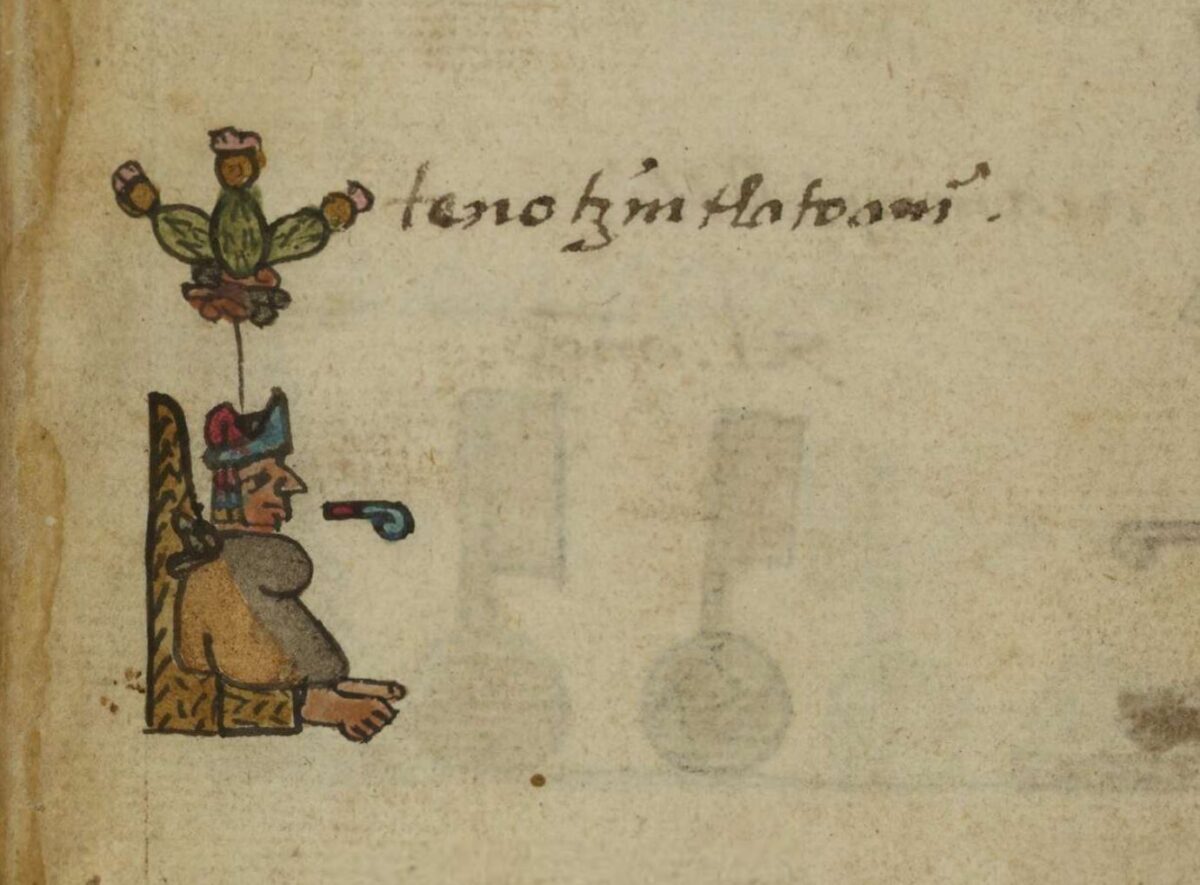
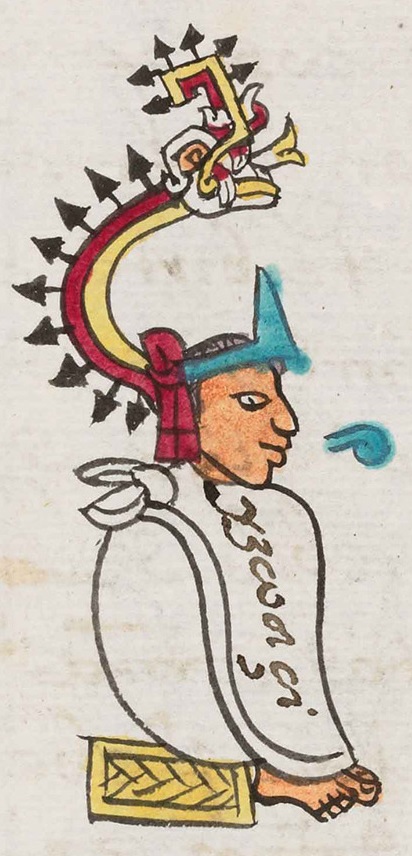
He appears frequently in many of the codices, or ancient documents, preserved from before and after the Conquest. Tenoch is recognizable by his name glyph, a rock with a cactus growing on it and he appears in Mendoza, Aubin and Azcatitlan codices. Tenoch is mentioned in several post-conquest written historic documents. He shares his name glyph with the city of Tenochtitlan.
Tenoch depicted in the Codex Azcatitlan, his name-glyph below him.(more…)
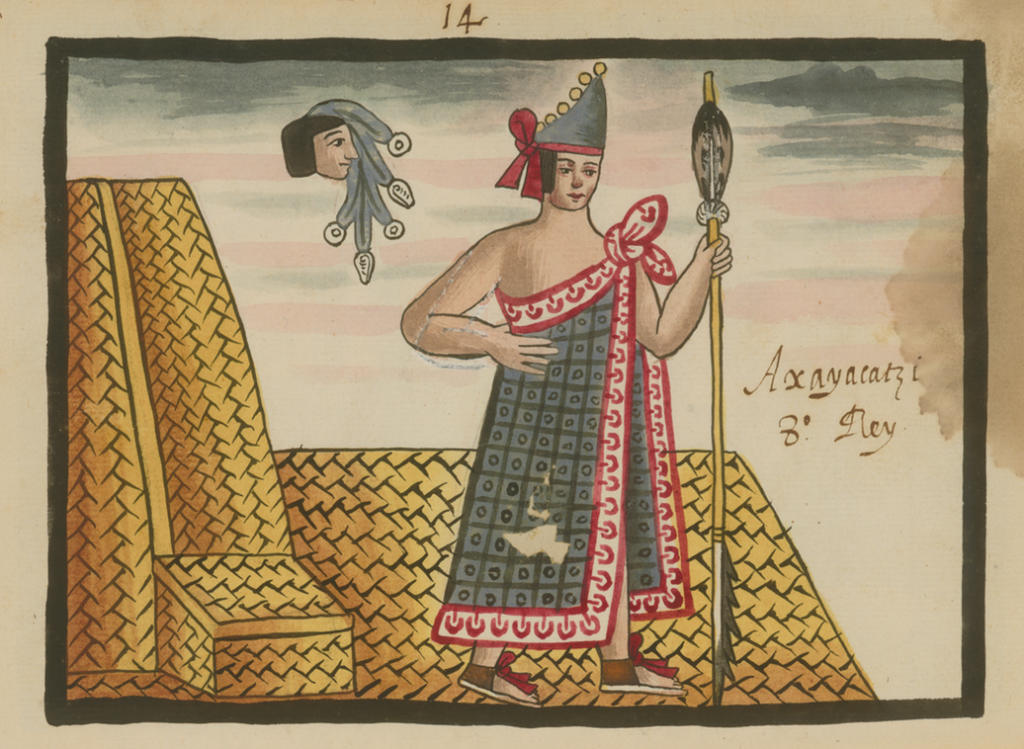
Formal Name: Axayacatzin Life: 1449-1481 Reign: 1469-1481 Name: Face of water Place of Birth:
A grandson of tlatoque Moctezuma I and Itzcoatl, Axayacatl was seemingly destined to become ruler of Tenochtitlan. But his military record helped him rise above his two older brothers, Tizoc and Ahuitzotl, to become favored by the elite decision makers, like Tlacalael. He had served as Captain General and High Priest of the Templo Mayor before ascending to the throne.
After the death of his grandfather, Tlacalael met with the other leaders of the Triple Alliance, Totoquihuatzli and Nezahualcoyotl. At first the nobles and elders pleaded with Tlacalael to be the next ruler, but he declined, telling them he already ruled and was respected and his decisions heard and that he was too old to rule. He suggested Axayacatl, who he would guide and mentor, and he was chosen to succeed. Axayacatl was crowned in 1469. The new tlatoani would be a good friend of Nezahualcoyotl until his death in 1472, when Axayacatl attended his funeral. The new king’s rule was eventful.
Painting of Axayacatl, Codex Tovar 1587 or 1588.(more…)
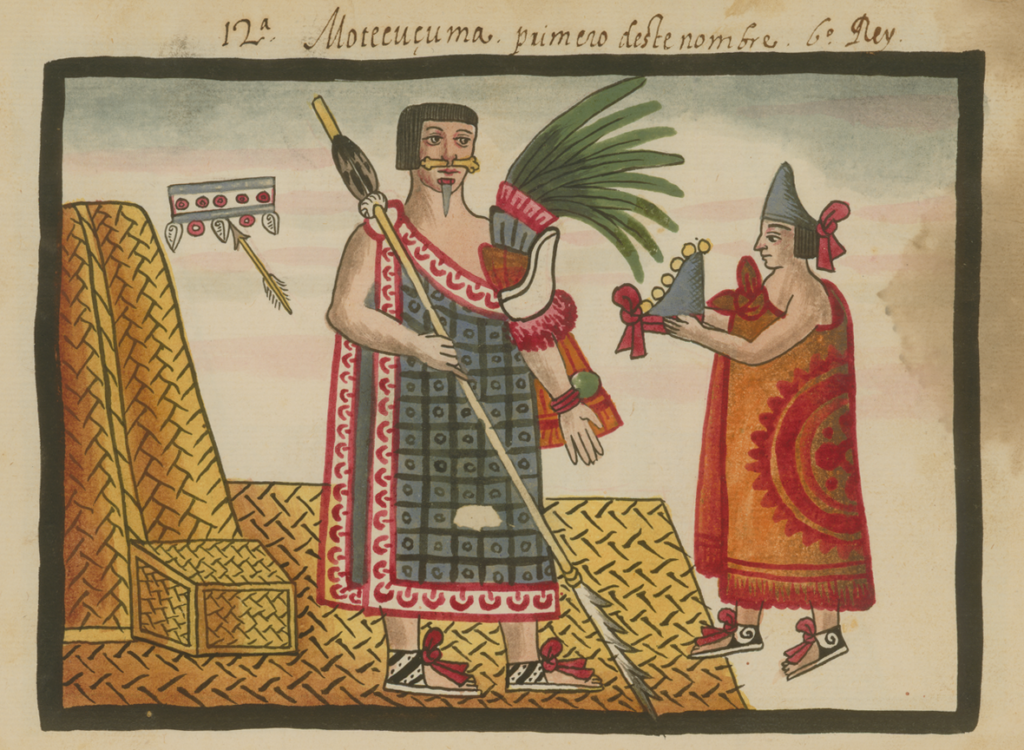
Formal Name: Moteuczomatzin Life: 1397/98-1469/1471 Reign: 1440-1469/1471 Name: Angry Like a Lord, fletcher of the sky Place of Birth: Tenochtitlan Died: Tenochtitlan, of illness.
Moctezuma Ilhuicamina, or Moctezuma the Elder, and his brother Tlacaelel were at the heart of the Mexica nobility and served as young generals under the violent leadership of Itzcoatl. They were part of a militant political faction that had raised Itzcoatl to the throne and stood in opposition to their other brother, and former tlatoani Chimalpopoca. After Chimalpopoca‘s assassination Itzcoatl, Moctezuma, Tlacaelel and their group took power. Moctezuma and Tlacaelel had big ambitions for the growing Mexica people.
Illustration of Moctezuma Ilhuicamina, Codex Tovar 1587 or 1588.(more…)
Formal Name: Itzcoatzin Life: 1380-1440 Reign: 1425/28-1440 Name: obsidian serpent Place of Birth: Tenochtitlan Died: Tenochtitlan, of illness.
Itzcoatl was selected to lead Tenochtitlan following the death of his predecessor, Chimalpopoca, who was allegedly murdered by his uncle Maxtla, the Tepanec leader in Coyoacan. Maxtla felt his father’s loyalty to his Mexica grandson Chimlpopoca was a liability to the economic health of the Tepanecs. And so, it is accepted that Maxtla coordinated the death of the Mexica leader and his son. Additionally, the Tepanec king Tezozomoc was possibly killed later, ending the line completely. The brash assassinations seem to be entirely the work of Maxtla, however one man benefited greatly: Itzcoatl.
Born around 1380, Itzcoatl was likely the son of Tlatoani Huitzilihuitl and his favorite slave girl, her name lost to history. Perhaps this forbidden mother, more alluring to the king than the Tepanec queen, was the root of Itzcoatl’s ferocity.
Formal Name: Chimalpopocatzin Life: 13??/1407 (Duran)-1424/28 Reign: 1417-1424/28 Name: obsidian serpent Place of Birth: Tenochtitlan Died: Tenochtitlan, likely assassinated.
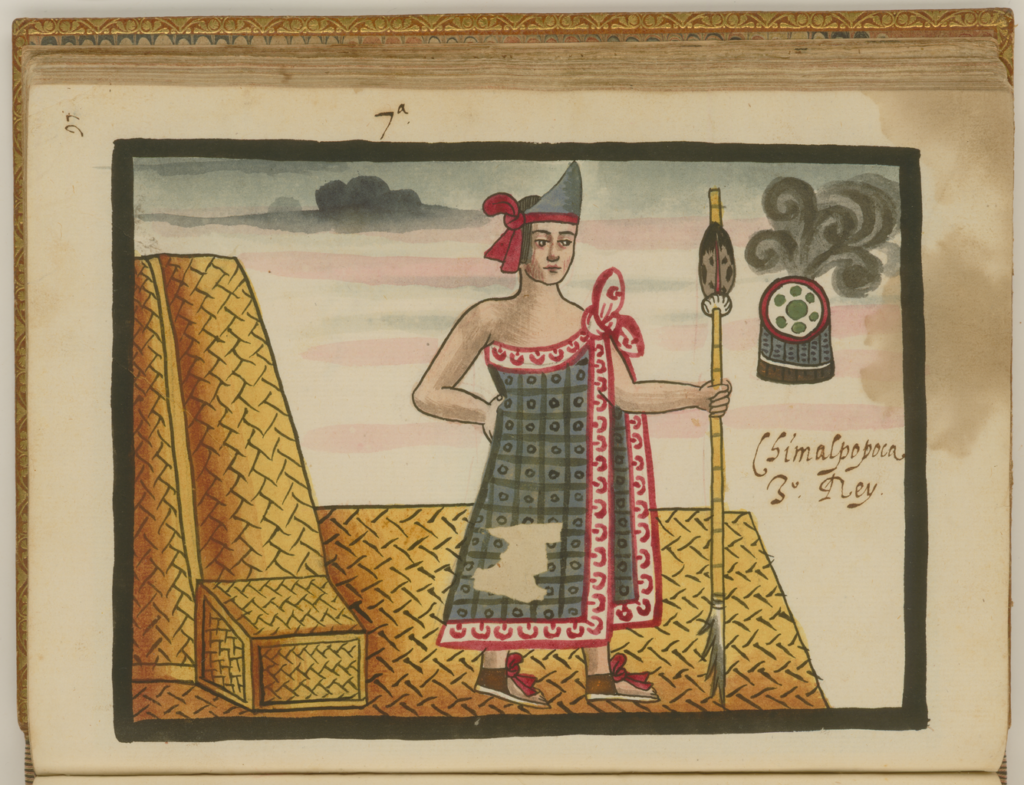
While it’s commonly accepted Chimalpopoca is the son of Huitzilihuitl, and grandson of Acamapichtli, there are versions of history that say his father was Acamapichtli, the first ruler of Tenochtitlan. It does seem he was the favorite grandson of the ruler of Atzcapozalco, Tezozomoc, according to several sources. I’m going to go with the version where he is the grandson of Acamapichtli and Tezozomoc. Chimalpopoca’s name means smoking shield and his name glyph is shown as a shield, or chimalli in Nahuatl, with smoke rising off the top.
Illustration of Chimalpopoca, Codex Tovar 1587 or 1588.(more…)
Formal Name: Huitzilihuitzin Life: Unknown-1416 Reign: 1396-1416 Name: hummingbird feather Place of Birth: likely Tenochtitlan Died: Likely in Tenochtitlan of natural causes.
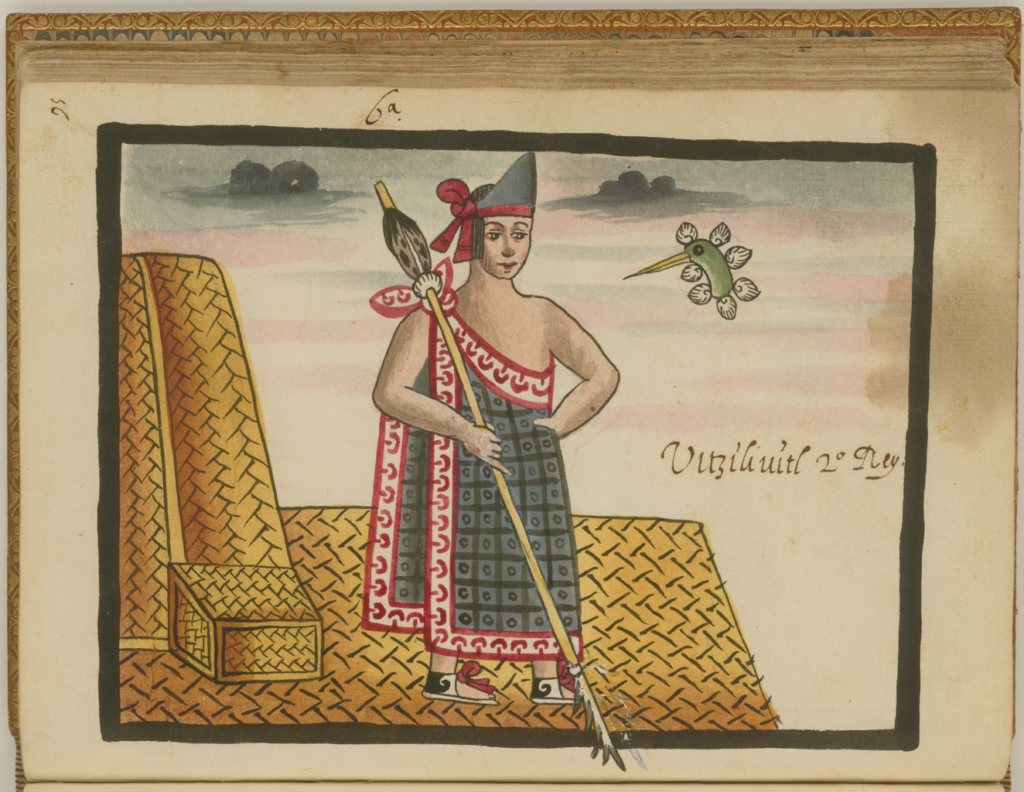
The second Tlatoani of Tenochtitlan, and the first that was born in the city, was Huitzilihuitl or formally known as Huitzilihuitzin. He was the son of the first tlatoani, Acampichtli, and a Mexica mother named Tezcatlan Miyahuatzin. His name translates to hummingbird feather, and his name glyph is shown as a green hummingbird head with feathers on the sides. The hummingbird was an important spiritual animal to the Mexica and their feathers were valued more than precious metals.
Huitzilihuitl was born into a growing Mexica community still subject to the Tepanec people of Azcapotzalco and their king Tezozomoc. Before he died, Acampachtli established the calpultin, a council of the four districts, that would not only consider nobility, but ability of potential rulers. Huitzilihuitl was the first selected by this council for his kindness and peaceable manner, according to Duran. The Cronica Mexicayotl describes him as a “very beloved son.”
Illustration of Huitzilihuitl, Codex Tovar 1587 or 1588.(more…)
Formal Name: Acamapichtzin Life: Unknown-1395/96 Reign: 1376-1395/96 Name: hummingbird feather Place of Birth: Possibly Texcoco or Culhuacan. Died: Likely in Tenochtitlan of illness.
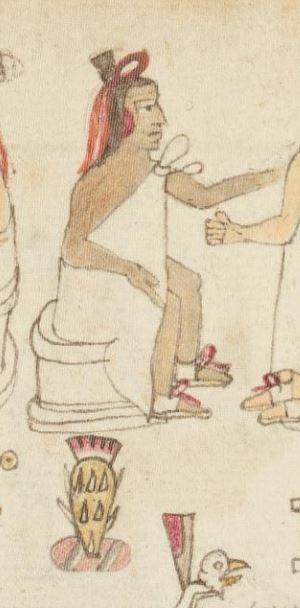
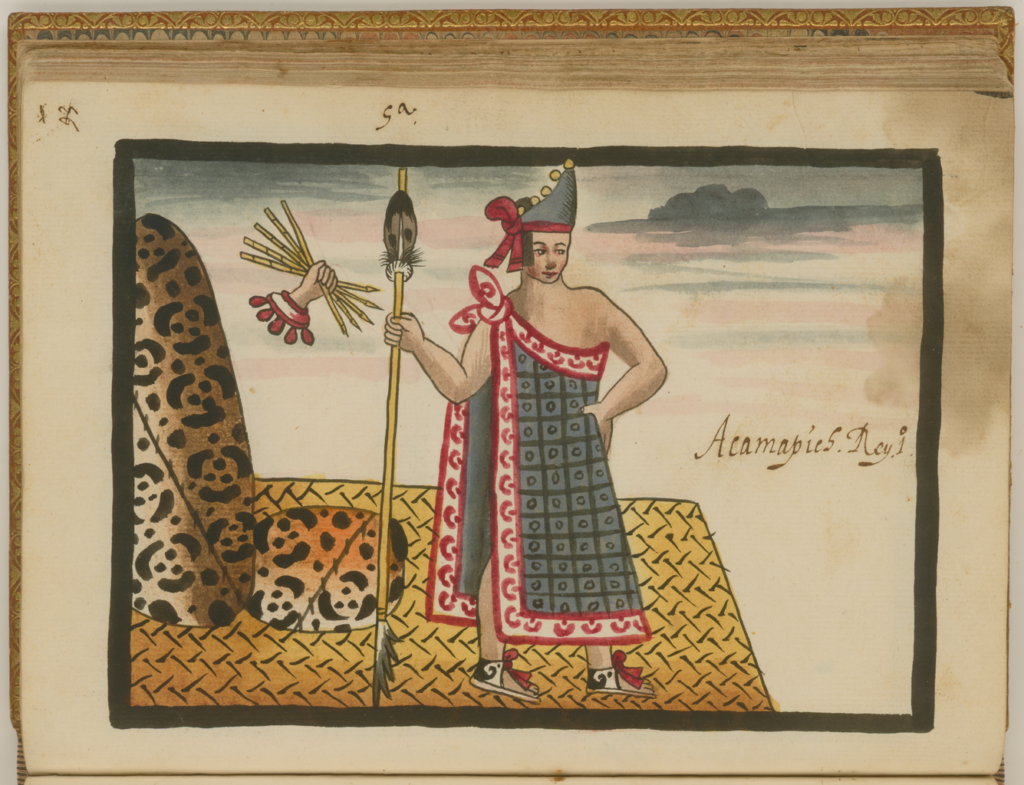
Acamapichtli was not born in Tenochtitlan, and was likely a native of Texcoco or Culhuacan. His name means “fistful of reeds,” and his name glyph used in the many historic codices is essentially that, a fist holding a bundle of reeds.
The council of Mexica elders decided to select Acamapichtli because of his dual Mexica-Colhuacan lineage and so cemented the political place of the newly established island-city of Tenochtitlan. Acamapichtli was crowned and became the first Tlatoani of Tenochtitlan around 1382. His mother being from Culhuacan, the dominant city-state at the time, was a critical consideration in his election. The Mexica were then a minor newcomer in a place with thousands of years of history, they needed status.
Illustration of Acamapichtli, Codex Tovar 1587 or 1588.(more…)