Formal name: Tizocicatzin
Life: 1449-1486
Reign: 1481-1486, 1481-1485 (Tira de Tepechpan)
Name: He who makes sacrifices, he who does penance
Place of Birth: Likely Tenochtitlan
Following the 80 days of funeral ceremonies for Axayacatl, the two remaining leaders of the Triple Alliance, Nezahualpilli of Texcoco and Chimalpopoca of Tlacopan, met with the Mexica high priest and advisor Tlacalael. They selected Tizoc to be the next tlatoani of Tenochtitlan. Tlacalael, in part, chose his grand nephew Tizoc out of loyalty to his dead brother, Moctezuma the Elder.
Tizoc was born around 1449, grandson of former emperors Moctezuma I and Itzcoatl, and the middle brother of three who would follow each other as tlatoani, Axayacatl, Tizoc and Ahuitzotl.
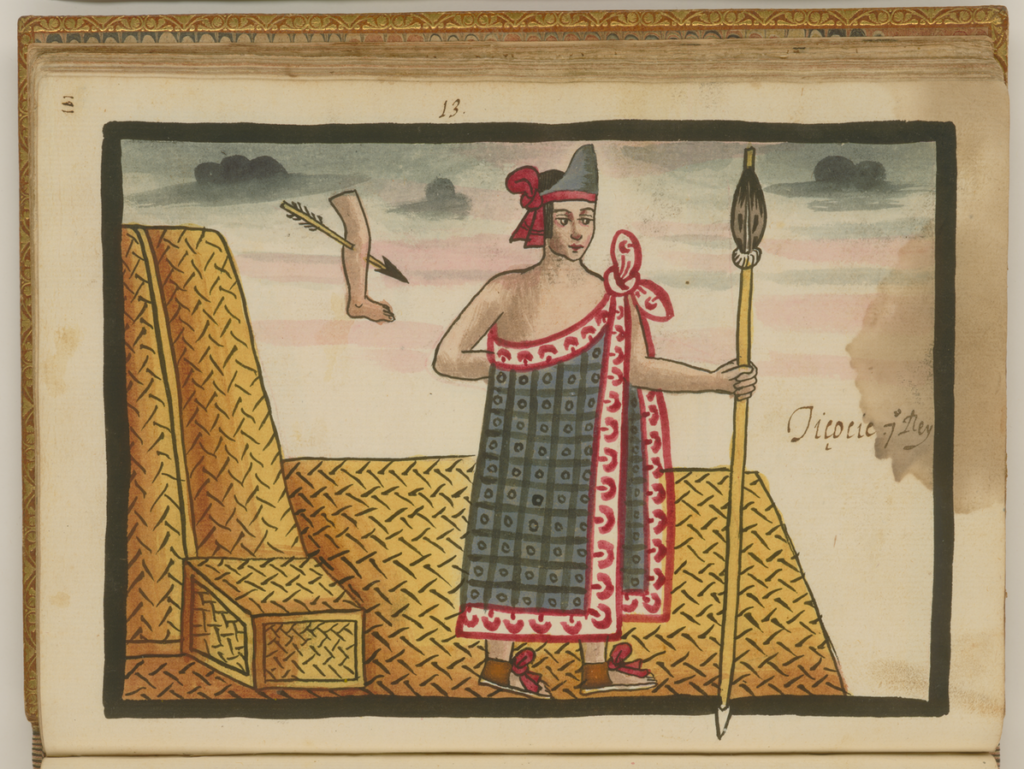
“In the entire five years and few days of Tizocicatzin’s rule nothing of note occurred,” Alva Ixtlilxochitl wrote in History of the Chichimeca Nation. This is an oversimplification as ruling an empire is certainly not “nothing.” Tizoc did hold the empire’s borders and conquered some lands within. Having an uneventful reign isn’t the worst thing a ruler could be known for. However, Duran noted Tizoc was thought of as cowardly and slow to act. There was frustration from elders that Tizoc was not accomplishing some of the things that had been set out for him, notably completing the Templo Mayor.
According to the Catholic writer, Duran, Tizoc was a child when he became tlatoani and Tlacaelel was essentially the de facto ruler. Tizoc’s inaugural war to claim captives for his festivities would be against Metztitlan. Duran claims the Mexica army lost 300 men and only claimed 40 captives, considered a disaster. This would presumably be seen as an omen, or was written retroactively to fill out the sense of Tizoc’s reign. Tizoc was honored with four days of festivities, rulers from around the Valley came to honor him. A mushroom dinner was held and people became “drunk” on the effects.
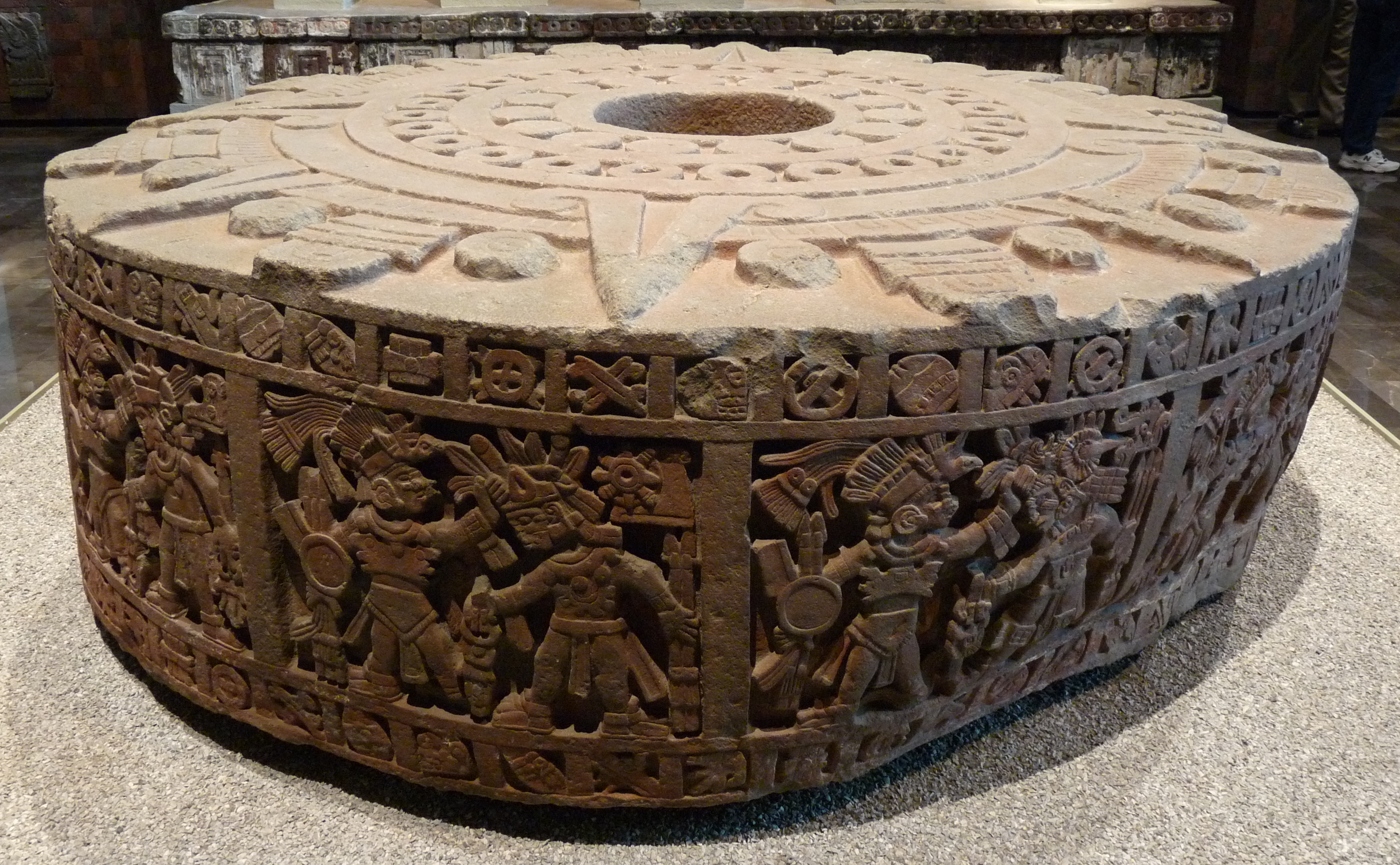
One of the few monuments bearing his image, the Stone of Tizoc, was likely carved to commemorate or elevate his short reign. The Tizoc Stone, now housed in the National Anthropology museum in Mexico City, is a circular stone about three feet tall. The stone is circled by ornate carvings depicting gods and the feats of Tizoc. Found in 1791 during the building of the Zocalo in Mexico City, it was likely a temalacatl, a sacrificial platform where an enemy warrior was tied and forced to fight against Aztec warriors. His ritualistic death would be a sacrifice to Huitzilopochtli.
The Florentine Codex credits Tizoc with beautifying Tenochtitlan and founding Tuxpan on the Gulf Coast. Additionally he is credited with victories over the Huastecs, a favorite target of the Mexica.
After five years, around 1486, Tizoc died. It is possible he was killed by internal forces as speculation includes theories that he died either by poisoning or natural illness. Duran indicates Tlacaelel did away with him after widespread frustration with his unenthusiastic efforts on the Templo expansion. The Cronica Mexica simply skips from his inaugural festivities to his death. He was cremated and buried at the foot of the temple to Huitilipochtli. Tizoc did have military victories in and around the existing Triple Alliance borders, including in Ecatepec and along the Gulf Coast.
Tizoc’s Accomplishments
Tizoc Stone
Templo Mayor expansion project begun.
Put down rebellion in Toluca.
Expanded and solidified the central empire.