Blog

  • Great Treasure of Moctezuma

    Below are lists and descriptions of the Great Treasure presented to Cortes in San Juan de Ulua. This is the legendary gift presented by Tendile and includes the much mentioned gold sun-disc and silver moon-disc. The descriptions of the treasure and the place vary by writer, but most place the exchange on either Cortes’s flagship or the beach where his men were setting up camp.

    Annals of Tlatelolco

    Very basic narrative, tells that they met Cortes at Tecpantlayacac and gave him the listed gifts. Also that a sacrifice was performed and rebuked with punishment of death by Cortes.

    • Suns of yellow and of white (gold and silver)
    • Mirror
    • Golden helmet
    • Golden shell headcover
    • Head fan of plumes
    • Shield of shell
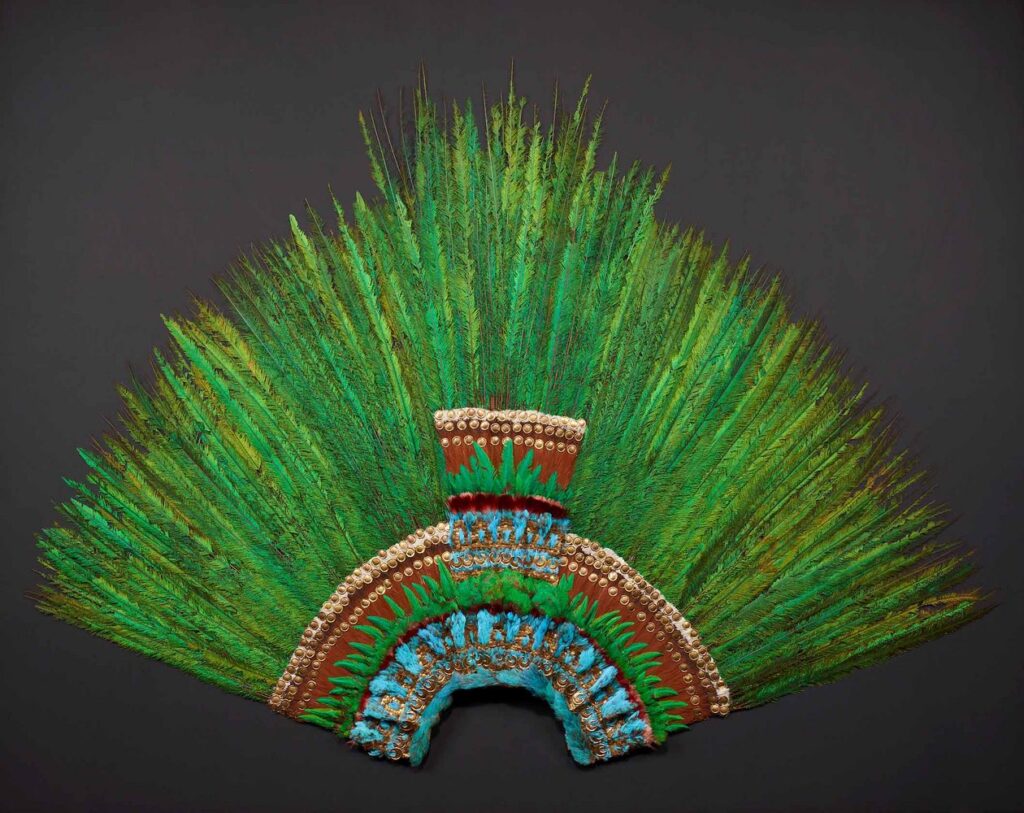
    Quetzal-feather Aztec headdress, held in Vienna Austria.
    Quetzal-feather Aztec headdress, held in Vienna Austria.
    (more…)
  • The Rulers of Tlacopan (Tacuba)

    Glyph for the altepetl, or city, of Tlacopan.

    What is today known as the Aztec Empire could be variously described as a cultural group of Nahuatl-speaking people, or as the political entity that ruled the majority of Nahua people, called the Triple Alliance. The Triple Alliance, in 1519, was made up of three “altepetls,” or something like city-states.These were the island city of Tenochtitlan, led by the famous Moctezuma; Tlacopan and Texcoco. Together these three altepetls shared the burden and bounty of their efforts.

    Aculnahuacatl

    The First Ruler of Tlacopan (1400-1430)

    Installed as the ruler by his father Tezozomoc of Azcapotzalco, he is considered the first Tlatoani of Tlacopan, ruler of the Tepanec people. I only found one citation in Diego Duran, which describes his efforts in driving the Mexica tribe out of Tepanec lands to the West of Lake Texcoco. He is apparently the founder of the Tepanec nation centered in Tlacopan. Apparently the historian Chimalpahin lists his lineage and some other details.

    (more…)
  • Who was La Malinche, Malintzin, Marina?

    One of the most intriguing women in history is an indigenous woman who would become known as La Malinche. Her origins are clouded in a fog of varying details, but generally point to some ideas of who this woman was. Some folks report her birthplace as Olutla (Gomara), others as Tepeticpac (Florentine Codex), or maybe it was Huilotlan (Alva Ixtlilxochitl).

    Her actual name is believed to be Malintzin and she seems to be from a town near the coast south of San Juan de Ulua. Most of the tales about her indicate she was at least a noble, if not a full on princess, in a high ranking family in a small town near Cotaxtla. Some accounts say she was sold by her family to support their sagging stake in society. Other tales say she was kidnapped in a raid. By some means she was separated from her family and her town and ended up in a market where she was acquired by the Maya as a slave.

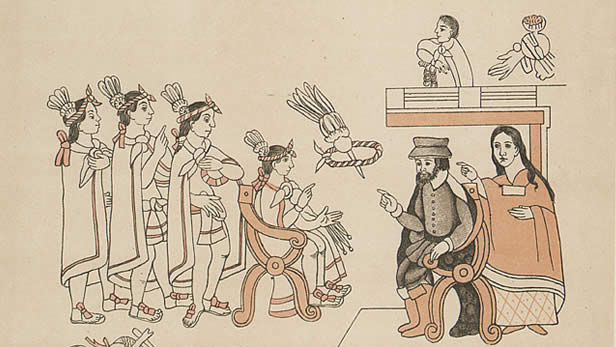
    Cortes and La Malinche
    An artist’s depiction of the meeting of Hernan Cortes and La Malinche with the Aztec emperor Montezuma II.
    (more…)
  • Who are the Nahua, Aztec, Mexica?

    Nahua, Aztec, Mexica

    As I’ve delved into “Aztec” culture I’ve learned of the many nuances of how the world refers to these people from the Valley of Mexico. Understanding who the Aztecs were takes an understanding of the politics of the Valley. Most Americans think of the Aztecs as Montezuma’s native people that were conquered by Cortes. That concept fits in as a hyper-simplistic footnote to the overall genocide of Indigenous people across North America, a “here’s how THEY did it” anecdote of complicity.

    Illustration of a moonlit Tenochtitlan and Lake Texcoco, by Tomas Filsinger.

    Lost in that simplified narrative is the cultural nuance of Aztec identity and the survival of a “mestizo” culture. Let’s delve in. A familiar European comparison might be the early British Empire, at least for identity structure. Ireland, Scotland and England share the English language. Politically, they are the United Kingdom, three kingdoms united. But if you call an Irishman English he would be quite offended. The people grouped together as Aztecs were also culturally distinct.

    (more…)
  • The Seven Remaining Aztec Feather-works

    1. Feather Headdress

      Location: Weltmuseum Wien – Vienna, Austria

      Probably the most iconic piece Aztec artefact in existence, this incredible green quetzal-feather headdress is majestic, even 500 years after its manufacture. Made in 1515, and was made using materials from across the empire, including hundreds of green quetzal feathers and thousands of gold buttons. Cortes took possession of it in Mexico during the conquest and quickly sent this piece back to Europe, possibly in the first shipment to Spain in July 1519.  It’s next documented appearance is when it was catalogued in 1596 at the death of Ferdinand II, who had apparently received it from a relative, who had received it from Cortes. It remained in the Hapsburg family until it made it into academic hands in 1880. Mexico has made attempts to have the headdress returned but as of today it resides at the Weltsmuseum Wien in Vienna, Austria.

      Quetzal-feather headdress housed in Vienna.
      Quetzal-feather headdress housed in Vienna.
      (more…)
    1. Burning the Boats and Sinking the Ships!

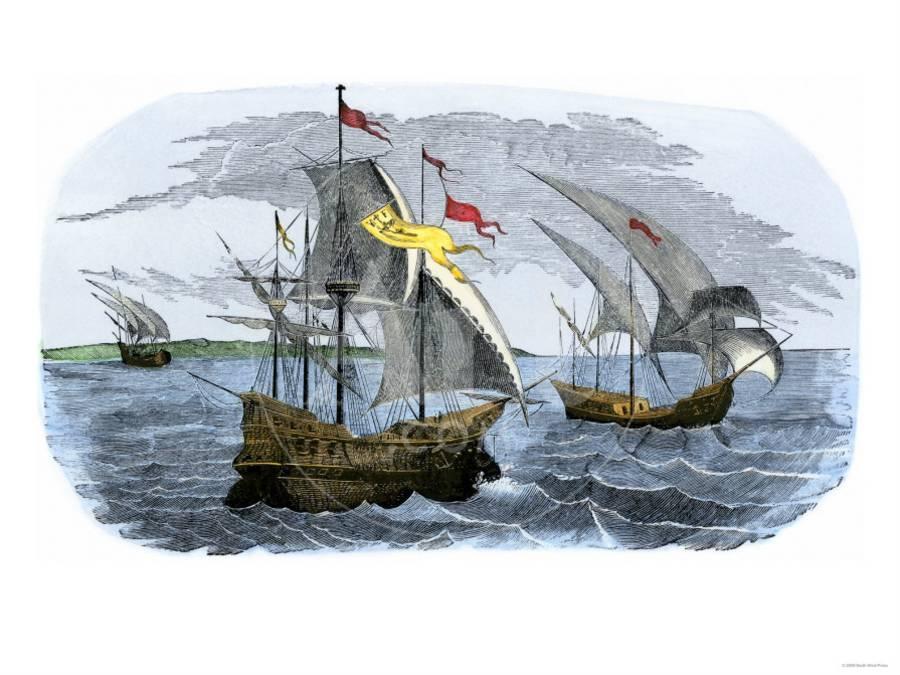
      One of the great mythologies of the Conquest of Mexico is Cortes burning, or sinking his ships in order to secure his men’s commitment to the march to Tenochtitlan and Moctezuma. The incident is cited in motivational speeches, and among historians as one of history’s greatest gambles. With dissent in the ranks and factions pushing for different goals and loyalties Cortes did seem to at least dismantle some of the ships, and possibly did sink a few.

      Ships of Hernan Cortes.
      (more…)
    2. Sword of Hernan Cortes

      A sword claimed to be that of Hernan Cortes, used during the Conquest of Mexico, currently sits in the Real Armeria de Madrid (royal armory) in Madrid, Spain. It is a rapier, meaning it is a long, slender sword with a decorative, protected hilt.

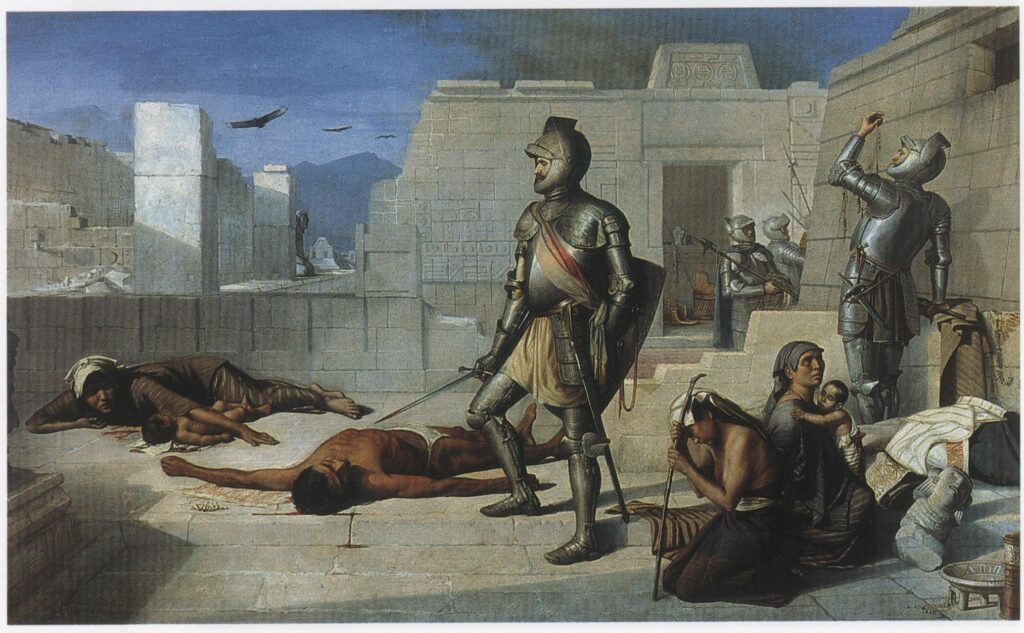
      Cholula Massacre by Felix Parra
      Cholula Massacre by Felix Parra
      (more…)