Aztec Rulers: Huitzilihuitl, Second Ruler of Tenochtitlan

Formal Name: Huitzilihuitzin
Life: Unknown-1416
Reign: 1396-1416
Name: hummingbird feather
Place of Birth: likely Tenochtitlan
Died: Likely in Tenochtitlan of natural causes.

The second Tlatoani of Tenochtitlan, and the first that was born in the city, was Huitzilihuitl or formally known as Huitzilihuitzin. He was the son of the first tlatoani, Acampichtli, and a Mexica mother named Tezcatlan Miyahuatzin. His name translates to hummingbird feather, and his name glyph is shown as a green hummingbird head with feathers on the sides. The hummingbird was an important spiritual animal to the Mexica and their feathers were valued more than precious metals.

Huitzilihuitl was born into a growing Mexica community still subject to the Tepanec people of Azcapotzalco and their king Tezozomoc. Before he died, Acampachtli established the calpultin, a council of the four districts, that would not only consider nobility, but ability of potential rulers. Huitzilihuitl was the first selected by this council for his kindness and peaceable manner, according to Duran. The Cronica Mexicayotl describes him as a “very beloved son.”
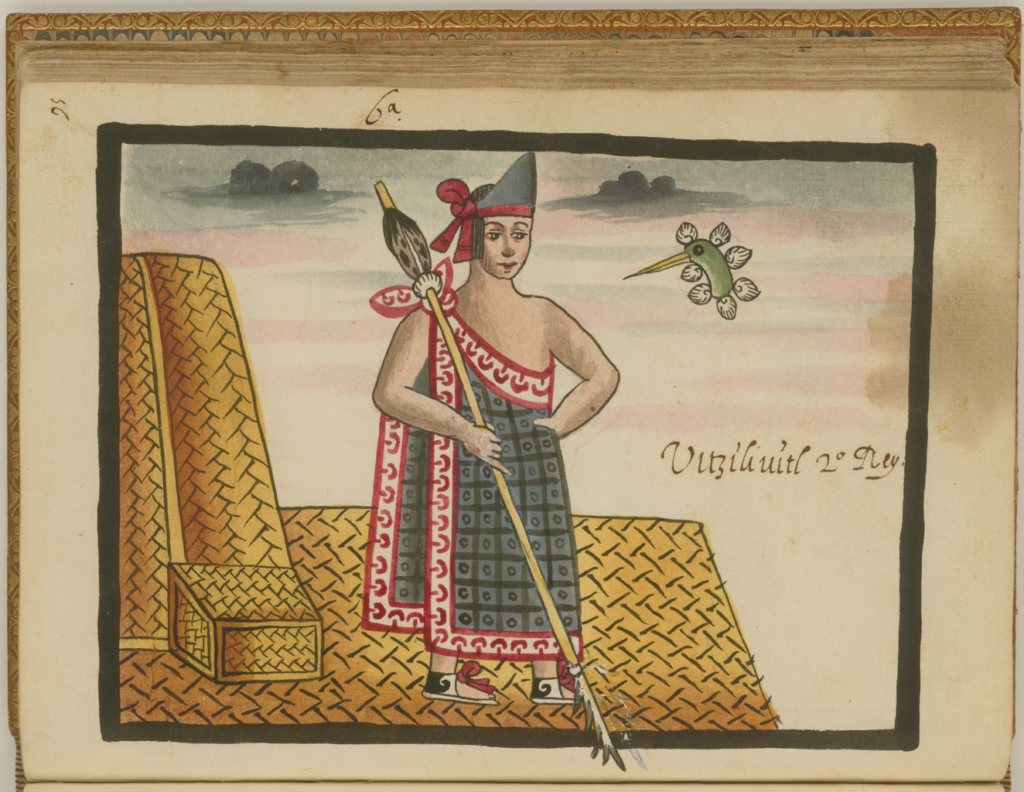
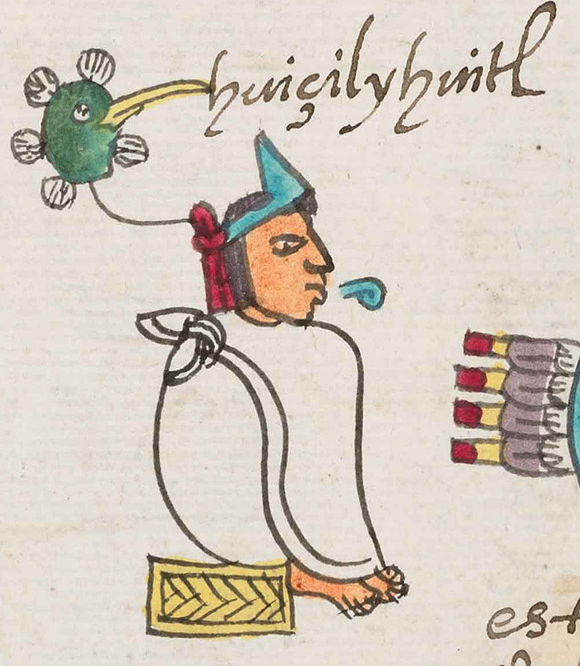
Illustration of Huitzilihuitl, Codex Tovar 1587 or 1588.
Huitzilihuitl
Huitzilihuitl, second ruler of Tenochtitlan, depicted in the Codex Mendoza.

A quick historic note, there was an earlier Mexica ruler named Huehue Huitzilihuitl, who ruled before the Mexica had settled in Tenochtitlan and were still living in Chapultepec. These are two separate men, who ruled at different times and in different capacities. Huehue Huitzilihuitl was captured and executed by the rulers of Culhuacan. It was almost a hundred years later that Tlatoani Huitzilihuitl reigned in Tenochtitlan.

Huitzilihuitzin took the throne at about age 16, after the death of his father circa 1403. Militarily, he continued to ally the Mexica with Tezozomoc in Azcapotzalco in their feud with Texcoco. During his reign he took several wives from other altepetls with an eye toward bolstering the Mexica nobility, including noblewomen from their Tepenec rulers in the cities of Tlacopan and Azcapotzalco. His political positioning was so important that a group of Mexica nobles went to Tezozomoc and asked for a daughter to marry Huitzilihuitl. Tezozomoc agreed, providing his daughter Ayauhuacihuatl to marry the Mexica king.

The new queen immediately went to work advocating for her new people to her father Tezozomoc. And Tenochtitlan profited greatly from her efforts, receiving gifts and reduced tribute levels. The queen also bore a son. When word was sent to Tezozomoc in Azcapotzalco, he was overjoyed and had his priests pray on a name. They returned with the name Chimalpopoca. The name was received in Tenochtitlan and given to the new prince. The baby would grow to become a favorite of his powerful grandfather.

Huitzilihuitl pursued his father’s politics, building ties to Azcapotzalco, slowly strengthening the city and army but like his father he did not break free from Tepanec control, but through marriage he loosened its grip. His reign saw the spread of cotton weaving, elevating Mexica clothing from the coarser maguey (agave) fabrics to the much softer cotton fabrics. Additionally he built schools, temples and renovated the Templo Mayor. He also was known to have issued laws to codify Mexica society. His legacy would continue through his sons, including two future tlatoque, Chimalpopoca and Moctezuma Ilhuicamina, as well as the powerful warrior, advisor and shaper of Mexica politics and culture, Tlacaelel.

The Florentine Codex summarized his reign like this: Vitsivitl, was the second lord of Tenochtitlan: the one who had dominion. Twenty and one years: and he began the wars, and fought with those of Culhuacan.

When the Queen Ayauhuacihuatl died it left the Mexica people heartbroken as she had taken them into her heart and was their protectress. A year later Huitzilihuitl also died around 1417, much beloved for his growth of the city. His son Chimalpopoca, the favored grandson of Tezozomoc, would succeed him.

Huitzilihuitzin’s Accomplishments
Supported Azcapotzalco in their war with Texcoco.
Cotton clothing adopted during his reign.
Codified early laws.

Acamapichtli <<- Huitzilihuitl ->> Chimalpopca
Aztec Rulers, The First: Acamapichtli

Formal Name: Acamapichtzin
Life: Unknown-1395/96
Reign: 1376-1395/96
Name: hummingbird feather
Place of Birth: Possibly Texcoco or Culhuacan.
Died: Likely in Tenochtitlan of illness.

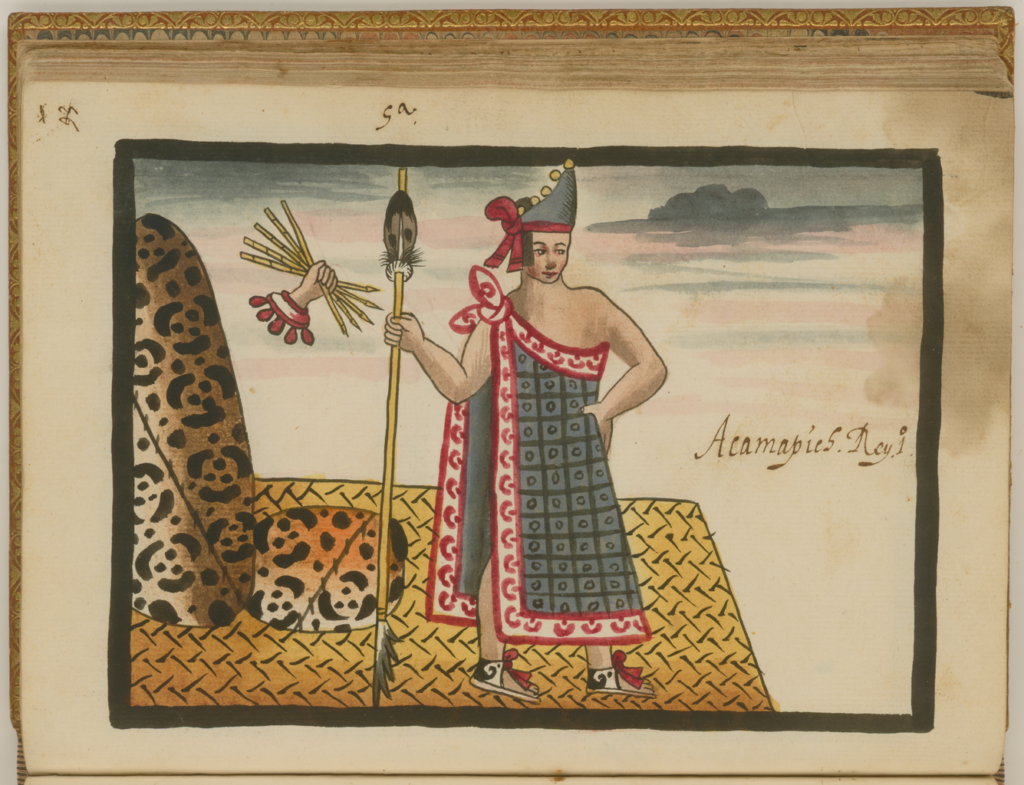
Acamapichtli was not born in Tenochtitlan, and was likely a native of Texcoco or Culhuacan. His name means “fistful of reeds,” and his name glyph used in the many historic codices is essentially that, a fist holding a bundle of reeds.

The council of Mexica elders decided to select Acamapichtli because of his dual Mexica-Colhuacan lineage and so cemented the political place of the newly established island-city of Tenochtitlan. Acamapichtli was crowned and became the first Tlatoani of Tenochtitlan around 1382. His mother being from Culhuacan, the dominant city-state at the time, was a critical consideration in his election. The Mexica were then a minor newcomer in a place with thousands of years of history, they needed status.

Illustration of Acamapichtli, Codex Tovar 1587 or 1588.

The Mexica, and their sister community, Tlatelolco, quickly fell into subjugation by Tezozomoc and the Tepanec people. When Acamapichtli had become ruler he knew he was leading a subjugated people. The Mexica military served Tezozomoc, and helped to enforce his empire. Despite remaining a tributary to the Tepanecs, Acampichtli had set the new Mexica city up for success by expanding the island. 

During his reign the city of Tenochtitlan expanded into the lake to the east, and districts were laid out to help plan the growing city. Despite the tribute due to Azcapotzalco the Mexica continued to thrive and grow. In one story from Duran, he tells how Tezozomoc demanded an extraordinary amount of tribute, including fully grown live trees, to be delivered. When the Mexica paid the tribute in full, on time, Tezozomoc was amazed – this story, whether true or some colonial myth – serves to illustrate the productivity of the Mexica people.

Hear about the first rulers of Tenochtitlan:

According to Duran, Acamapichtli’s queen, Ilancueitl, could not conceive a child and each of the lords, including the Aztlan-era founder Tenoch, gave him a daughter. Duran tells of a slave girl so beautiful that despite his queen and many concubines, this slave girl had stolen Acamapichtli’s heart. From her came a baby boy named Itzcoatl, who would become a consequential Tlatoani and one of Acamapichtli’s three descendants to rule. It would be Itzcoatl who would finally free the Mexica from their Tepanec rulers.

The Florentine Codex summarizes Acamapichtli’s reign like this: Acamapichtli was the first lord of Mexico of Tenochtitlan: who had dominion of Mexico, “twenty-one years, all was quiet in the land: and there were no wars in his time.” This is obviously a very over-simplified statement as the Mexica were essentially mercenaries for Tezozomoc. Additionally, the Anales de Tlatelolco indicate he led campaigns against communities on the southern Lake Xochimilco.

During his reign, Acmapichtli laid out the four main districts of Tenochtitlan, including Cuepopan and Moyotlan. Through his physical person and lineage he established the Mexica-Tenochtitlan monarchy, from which the subsequent eight tlatoque would issue. Before his death he also laid out the process on how the next tlatoani should be selected. A council of leaders from the four districts would elect the next ruler, rather than it flow from father to first-born son the council would consider the abilities and persona of the future king.

He seems to have died peacefully, perhaps from illness, around 1400, the date varies by source. According to Duran, Acamapichtli expressed regret that he could not free his people from Tepanec control. From one of his noble wives came a son named Huitzilihuitl, who the new council would select to succeed him. Acamapichtli was buried in a modest grave, it is said, without treasure or slaves as other rulers typically were, due to the humble status of the early Mexica people.

Acamapichtli’s Accomplishments:
Built out the chinampa farming system.
Intermarried with numerous women from neighboring cultures to build family ties.
Created the four main neighborhoods of Tenochtitlan.
Great politician who established Tenochtitlan, politically, in the Valley.
Established a new royal line for Tenochtitlan with every subsequent ruler being a direct descendent until the Contact Period.
Conquered Mizquic, Xochimilco, Cauahnahuac, Cuitlahuac.

Acamapichtli ->> Huitzilihuitzin

The Rulers of Tlacopan (Tacuba)

What is today known as the Aztec Empire could be variously described as a cultural group of Nahuatl-speaking people, or as the political entity that ruled the majority of Nahua people, called the Triple Alliance. The Triple Alliance, in 1519, was made up of three “altepetls,” or something like city-states.These were the island city of Tenochtitlan, led by the famous Moctezuma; Tlacopan and Texcoco. Together these three altepetls shared the burden and bounty of their efforts.

While researching for the podcast, I came across a lack of information on the rulers of Tlacopan. So I looked into it. What I’ve found so far is murky. I’m sure if I had the time and access to go through the many codices I could find more, but in my sources, here’s what I came up with (Mostly from Alva Ixtlilxochitl and Duran):

Aculnahuacatl – The First Ruler of Tlacopan (1400-1430)

Installed as the ruler by his father Tezozomoc of Azcapotzalco, he is considered the first Tlatoani of Tlacopan, ruler of the Tepanec people. I only found one citation in Diego Duran, which describes his efforts in driving the Mexica tribe out of Tepanec lands to the West of Lake Texcoco. He is apparently the founder of the Tepanec nation centered in Tlacopan. Apparently the historian Chimalpahin lists his lineage and some other details.

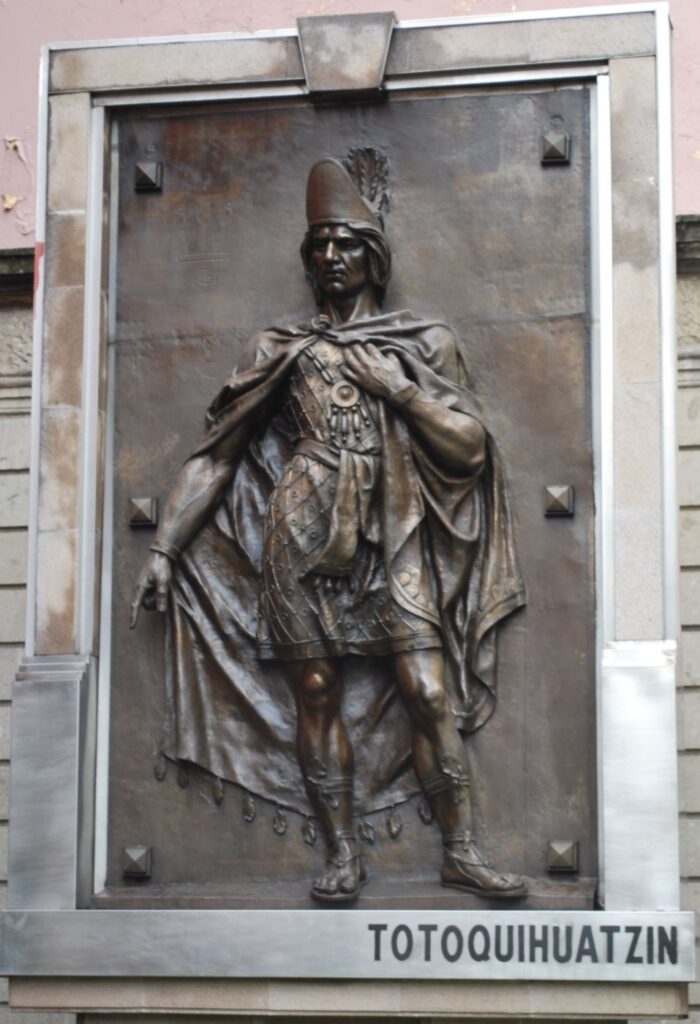
Totoquihuatzli (Totoquihuatzin) – (1430-1469?)

Duran talks about him a lot and describes his presence at a planning meeting for the final version of the Templo Mayor, for which he obligated his people to build the backside. The seventh phase of the Templo Mayor was built in 1454. He was also known as a poet.

Chimalpopoca of Tlacopan – (1469-1489)

Not to be confused with the Mexica Tlatoani of the same name, he ruled from 1469 to 1489. I found lots of unsourced references to him, I did not find any actual references from sources.

Totoquihuaztin II (1489-1520)

Totquihuatzin II
Totquihuatzin II, tlatoani of Tlacopan at the time when the Spanish arrived in Mexico.

Most of the sources just name a Totoquihuatzli, so it’s possible there are multiple Totos. This would have been the ruler of Tlacopan when the Spanish arrived. There are a lot of conflicting dates and ambiguous use of names in the Tlacopan lineage. Duran lists a Totoquihuatzin as early as the renovation of the Templo Mayor, and as late as Moctezuma II’s coronation in 1502. One source (Duran) says he died shortly after Moctezuma II’s coronation. 

Tetlepanquetzatzin (1520-1525)

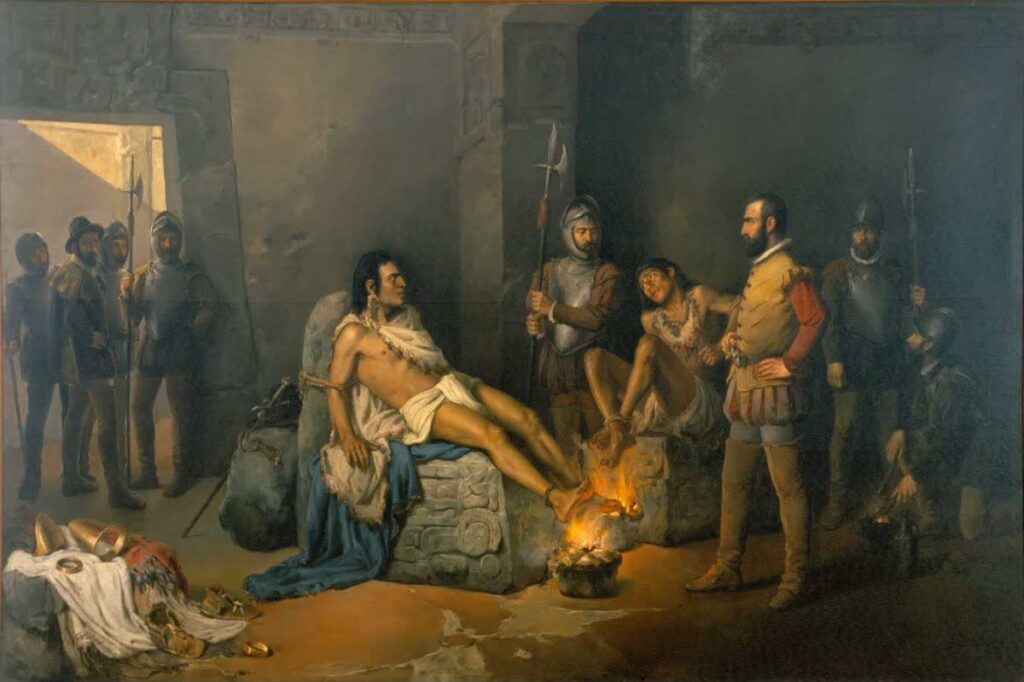
He was the son of Totoquihuatzli II, and was baptized as Don Pedro Tetlepanquetzal. There seems to be the most certainty around Tetlepanquetzal. That’s because of his murder alongside the two other rulers of the Triple Alliance at the hands of Hernan Cortes. In 1521 he was captured while fleeing Tenochtitlan along with Tlatoani Chauahtemoc. They were tortured about the missing gold lost during the wars in Tenochtitlan. Tetlepanquetzal ruled Tlacopan from captivity and eventually was taken on an expedition with Cortes to Honduras. Cortes became paranoid of the rulers he had in tow and decided to have them killed. All three acting rulers of the Triple Alliance were hanged in 1525.

The Torture of Cuauhtémoc, a nineteenth-century painting by Leandro Izaguirre. Presumably it is Tetlepanquetzal on the right.

Don Antonio Cortes Totoquihuatzli (Colonial ruler)

He was the brother of Tetlepanquetzal and son of Totoquihuatzli II. He is best known for arguing for indigenous rights to the royal court of Charles.

Who Was Moctezuma?

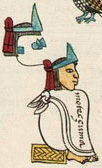
Moctezuma represented in the Codex Mendoza.

Moctezuma Xocoyotzin had been raised to be head of the Aztec Empire and leader of the Mexica people. He had likely graduated from the Calmecac military academy and was an accomplished military leader, having proven himself as a commander. He was a faithful and knowledgeable religious man who took much weight in the signs and spirits.

His physical appearance was described by Diaz as slender and handsome, with straight dark hair to his ears with a slight black beard and slightly darker skin than the Spanish.

During his reign he expanded the Empire to the South and West and made reforms to the social class. In the end he sat atop a valley full of people tired of Mexica rule. Cortes used this animus to form allegiances and support networks that he leveraged against Moctezuma and the Mexica leaders in Tenochtitlan. Whether killed by the Spanish, or by a shower of stones and arrows from rebellious Tenochs, his death meant little for the end was already upon them.

Facts: Ninth Tlatoani of Tenochtitlan, and head of the Aztec Empire and the Triple Alliance w/ Texcoco and Tlacopan.

Name means “one who frowns in anger,” scowl?

Born 1466ish

Took the throne in 1502.

52 or 53 at time of conquest

Two main wives (Diaz). Many children, one wife was Tlapalizquixochtzin and the other Teotlalco, both princesses from Ecatepec.

Several children who went on to become nobility.