
Formal name: Cuitlahuatzin
Life: 1476-1520
Reign: 1520-1520
Name: place of excrement
Place of Birth: Likely Tenochtitlan
Death: Tenochtitlan, of smallpox.
Cuitlahuac took power during the occupation of the Mexica capital city in 1520 when Cortes and his Indigenous allies were holed up in his father’s palace. Before Moctezuma was killed the Mexica forces were rallying behind Cuitlahuac. The conquistador Diaz, who was present in Tenochtitlan during the palace siege, said Cuitlahuac was outside the palace every day rallying fighters and motivating his warriors to keep up the fight. I imagine Diaz peering out of a crack in a barricade and seeing Cuitlahuac fighting for his people. Cuitlahuac was the leader the Mexica needed in that moment, fiery and clear on the threat the Castilians posed.
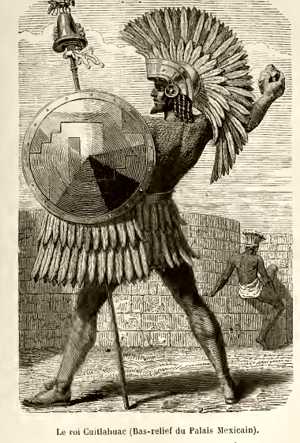
Born around 1476, Cuitlahuac was a noble prince, son of the sixth Tlatoani Axayacatl and younger brother to Moctezuma II. His name means something like “place of excrement,” and his name glyph is very obviously a tidy pile of human excrement. But it’s important to remember that excrement had value and was seen as part of the renewal of both the crops and the land, as fertilizer and literal chinampa farmland from which the island was partially made of.
Presumably he was trained at the Calmecac school for elites along with other noble boys. There he would have learned the noble arts of astronomy, religion, war, math and politics. As he grew he would come to be a trusted advisor to his older brother, ruler of Tenochtitlan and the Triple Alliance, Moctezuma II.
Cuitlahuac was about 44 years old and ruler of Iztapalapa, a royal compound more or less, when Cortes arrived in Mexico. From the very beginning of the conflict with Cortes, Cuitlahuac had been in consistent opposition to Moctezuma’s soft play with the Spanish, often acting as the counter voice to King Cacamatzin of Texcoco, who favored courting Cortes. He had been urging Moctezuma not to allow them into the city.
After being asked for his opinion by Moctezuma, he gave sound advice as reported in the History of the Chichimeca Nation: “My opinion, great lord, is that you should not allow into your house one who would expel you from it.” The text goes on to say Moctezuma did heed his advice and sought to hinder Cortes, but he would eventually stray from that decision.
As Cortes neared Tenochtitlan in 1519, he stayed one night in Iztapalapa as a guest of Cuitlahuac. Cortes and Bernal Diaz both described Iztapalapa as a beautiful town gleaming white with fresh plaster, gardens and fountains as well as great halls and a palace. The next morning the Spanish caravan headed to Tenochtitlan for that fateful meeting.
Cuitlahuac was there when Cortes and Moctezuma met in the street, on November 8, 1519, likely having travelled with Cortes’ procession from Iztapalapa. He would have gone ahead to help his brother Moctezuma as he prepared to meet Cortes. The two princes, Cuitlahuac and Cacama of Texcoco, escorted Moctezuma in his golden litter to the Huitzillan area. Cuitlahuac was present at the meeting and possibly prevented Cortes from hugging or touching Moctezuma, as was forbidden.
Despite Cuitlahuac’s warnings, Moctezuma allowed the Spanish into Tenochtitlan, which predictably turned bad when Cortes took both Moctezuma and younger brother Cuitlahuac hostage in his own palace. Eventually Cuitlahuac was let go, to open the markets, according to one source.
Moctezuma was held hostage by Cortes and spent months in captivity as a powerless proxy ruler. In a desperate ploy to regain control of the angry Mexica populace the Spanish brought Moctezuma out on a palace balcony. The conquistador Bernal Diaz claims the crowd shouted to Moctezuma that Cuitlahuac was already the tlatoani and they had abandoned Moctezuma’s leadership, surely a disheartening message to hear for the once beloved king. Whether he was killed by a Spanish dagger or a Mexica stone isn’t known for sure, but in a way it’s somewhat irrelevant – neither group had use for him anymore. The Mexica had rallied behind Cuitlahuac.
With Moctezuma dead, the remaining nobles and generals selected Cuitlahuac to be the next tlatoani. He continued his fiery resistance to the Spanish for several days until it climaxed on the Noche Triste when the Spanish attempted to escape under cover of darkness. After the Spanish were driven from the city the Mexica began to clean and repair Tenochtitlan, as well as cremate the many dead.
After only a few months of his leadership, a new enemy crept across the island capital – smallpox. With no fresh water in the city and mounting dead the disease spread quickly. It’s recorded that people lay in every house groaning in pain from the sores that covered their bodies. While trying to rebuild the city Cuitlahuac contracted smallpox and died. The Codex Aubin says he died of the “pustules,” after an 80-day reign.
Cortes was gone, but with their city destroyed, the majority of their population sick or dead, it was a dark time for the Mexica. There were no festivities, or great parties for the deceased tlatoani.
Cuitlahuac’s Accomplishments
Drove Cortes from Tenochtitlan during Noche Triste.
Mounted and maintained Tenochtitlan’s defenses during Moctezuma’s captivity.
Ruler of Iztapalapa.
Moctezuma II <<- Cuitláhuac ->> Cuauhtémoc